
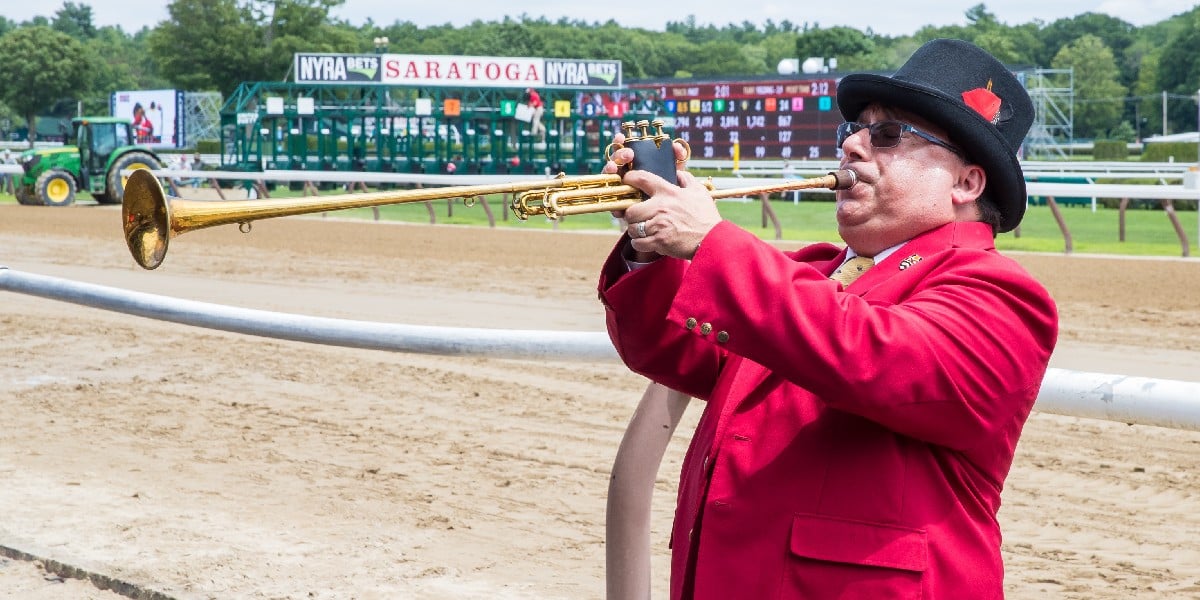
The iconic 34-note bugle tune known as the Call to Post began as a French cavalry signal and transitioned into American horse racing in the 1860s, with Saratoga Race Course famously pioneering its use as a track tradition.
The melody traces back to 1804 as a French cavalry trumpet call titled “Pour la Reunion des Trompettes,” composed by David Buhl.
The U.S. military adopted the tune around 1834, where it was originally known as the Assembly of the Trumpeters before officially being designated as First Call in late-19th-century Army and Navy manuals (used as a pre-reveille or five-minute warning signal).
Horse racing adopted the First Call bugle tune sometime in the 1860s, most notably at Saratoga Race Course.
Because Civil War-era Americans were deeply familiar with military bugle calls, tracks began using the sound to announce that betting was wrapping up and jockeys needed to guide their horses out of the paddock and onto the track.
Today, when you hear a bugler lift a herald trumpet to play those familiar notes 5 to 10 minutes before post time, it serves multiple practical and ceremonial purposes:
- It alerts grandstand patrons that the race is approaching and wagering windows will close shortly.
- It signals the horses and jockeys to leave the paddock and begin their parade to the starting gate.
- It links modern racegoers directly to a tradition that has echoed across American sporting history for over 150 years.
It’s the last point that really resonates with railbirds of a certain age. Technology has changed just about everything in modern sports, except how a horse race begins.
All it takes is one bugler, a shiny brass horn, and 34 unmistakable notes to get the heart racing. Place your bets—it’s Post Time.

